

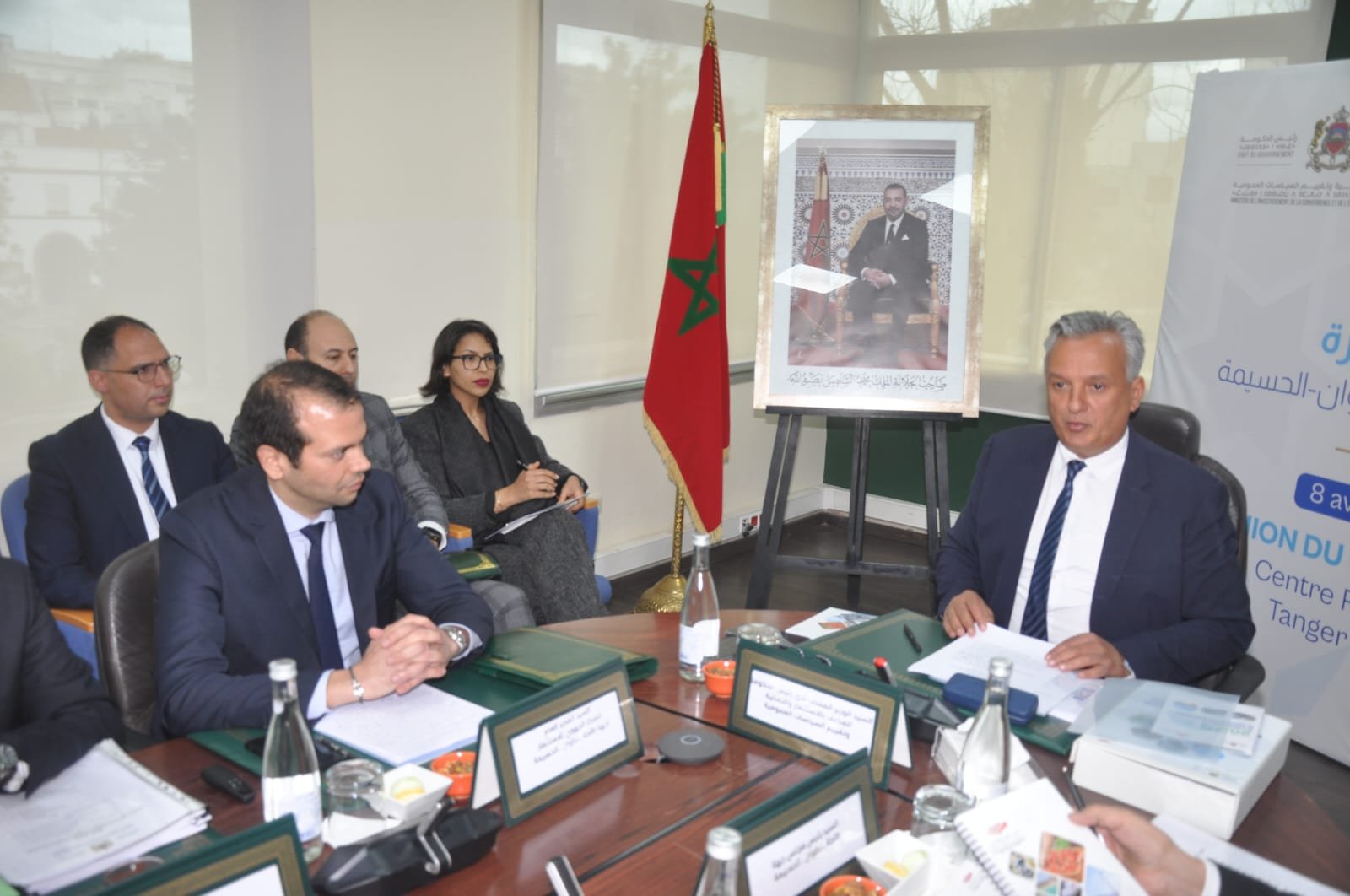
At a time when Moroccan regions are competing to attract high-value investment and strengthen their territorial competitiveness, the Tangier-Tetouan-Al Hoceima region continues to assert itself as one of the Kingdom’s most dynamic emerging economic hubs. The 2025 annual results of the Regional Investment Center reveal a powerful momentum measured not only in capital mobilized, but also in the region’s growing ability to turn projects into concrete drivers of employment and business climate improvement. These indicators were presented by the Center’s Director General, Yassine Tazi, during the latest board meeting.
In 2025, the Regional Unified Investment Commission approved 478 investment projects out of 590 files reviewed, representing an acceptance rate of more than 83 percent and a total investment volume of nearly MAD 80 billion. Beyond the headline figures, these results reflect a region that is steadily gaining institutional maturity in handling investment files and accelerating administrative processing.
The economic impact of these projects is equally significant on the social front, with more than 50,000 jobs expected to be created. This gives the investment momentum a broader developmental meaning: it is not merely about financial flows, but about reshaping the regional labor market and opening new opportunities for a wide segment of the population.
Sectorally, industry remained the leading pillar of investment, accounting for 37.5 percent of the total, confirming its role as the region’s main engine of growth. Renewable energy ranked second with 22 percent, followed by tourism with 14 percent. This distribution points to an increasingly diversified productive base and highlights the region’s ability to combine manufacturing strength, green transition ambitions, and tourism potential within a more balanced development model.
Industry also maintained its dominance in employment generation, with more than 43,800 jobs, representing 77 percent of the total expected positions. Tourism, for its part, is expected to generate around 6,480 jobs, reinforcing the image of the region as a multi-dimensional economic space where industrial performance and tourism potential can grow side by side.
Another striking indicator lies in the improvement of administrative efficiency. The average processing time for investment files was reduced to just 6.4 days, a strong signal of progress in administrative simplification and coordination among the various stakeholders involved in the regional investment ecosystem. In the business world, speed and clarity are often just as decisive as financial incentives.
The year 2025 also saw progress in entrepreneurship support, with more than 5,500 companies and project holders benefiting from several programs, including Investangier Academy, alongside awareness campaigns and outreach initiatives dedicated to very small, small, and medium-sized enterprises. In parallel, the Center strengthened its support for innovation through the second edition of the Territory Development Challenge, which rewarded three innovative projects.
On the promotional front, the Center took part in more than 60 economic events at the regional, national, and international levels, while accompanying over 120 delegations of foreign investors during their visits to the region. It also made progress in handling administrative disputes by settling 136 reconciliation requests amicably, with a success rate of 96.4 percent and an average processing time of no more than five days. These figures reflect a clear effort to build a more reliable and business-friendly environment.
Taken together, these results show that Tangier-Tetouan-Al Hoceima is no longer simply an attractive investment destination. It is increasingly becoming a regional model for transforming economic appeal into tangible outcomes in employment, service efficiency, and productive diversification. Northern Morocco is therefore emerging not only as a logistics and industrial gateway, but also as a living laboratory for modern territorial investment policies