

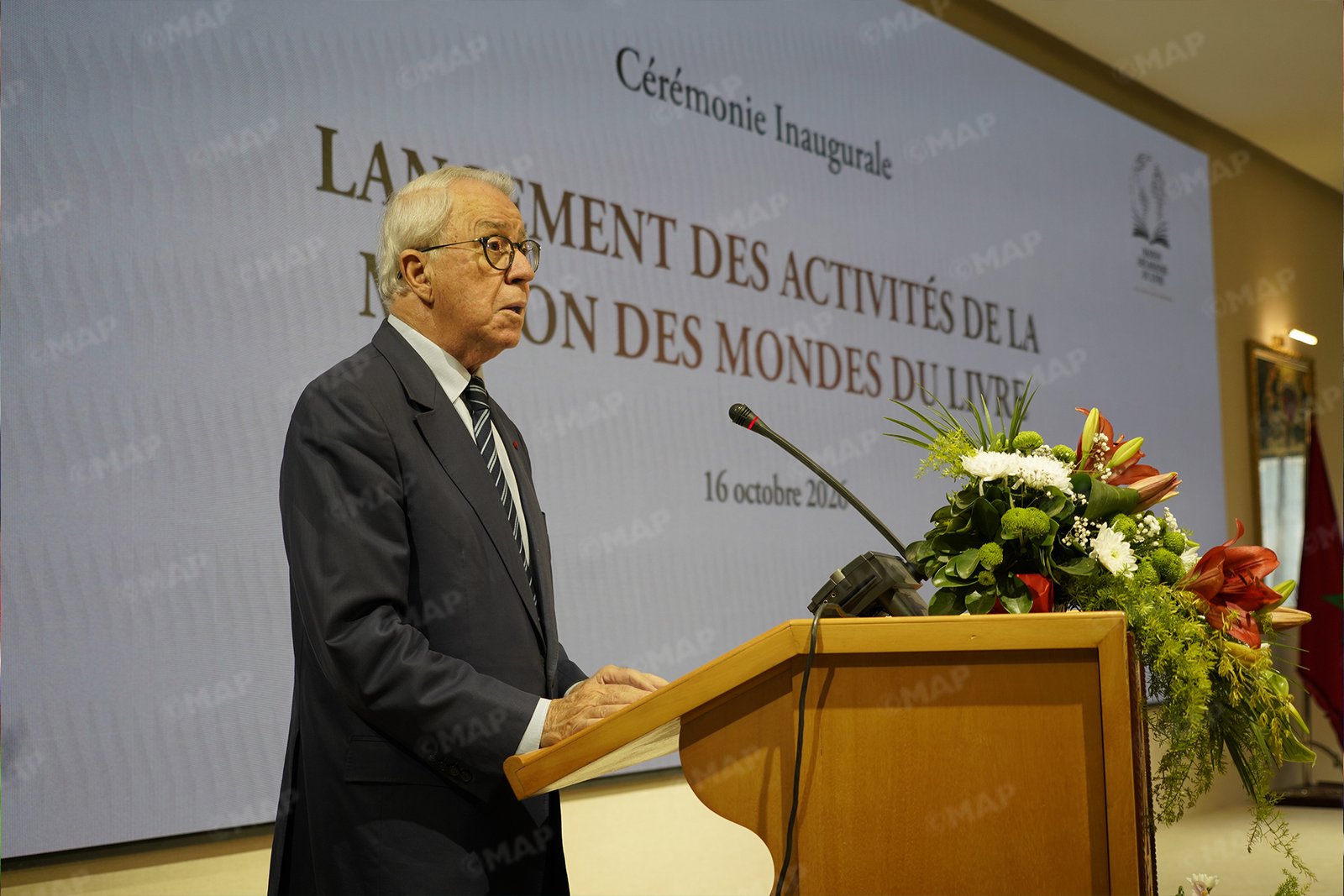
The Maison des Mondes du Livre serves as a platform for global literary exchange among writers, researchers, students and readers, following Rabat’s designation as UNESCO’s World Book Capital 2026.
The launch brought together several prominent figures from the literary and cultural world, including Nobel Prize in Literature laureates Wole Soyinka and Jean-Marie Gustave Le Clézio, as well as International Booker Prize winner David Diop.
The Maison des Mondes du Livre also draws on a collection of 54 reference books representing the 54 African countries. The collection includes works reflecting the continent’s literary heritage, from oral traditions and manuscripts to foundational and contemporary writing.
Beyond the library itself, the new institution reflects a broader vision for future spaces in Rabat’s Oudayas and Ocean neighborhoods dedicated to artistic residencies, readings, book launches, music and public debate.
At the opening ceremony, Permanent Secretary of the Académie du Royaume du Maroc Abdeljalil Lahjomri described the new institution not merely as a physical space where books are stacked on shelves, but rather as an environment that creates the conditions for new works, shared reflection and dialogue between literary cultures.
For her part, academic and writer Rabiaa Marhouch explained that the program would focus on international creative residencies bringing together writers, researchers and other creators.
It will also promote publishing, literary meetings and dialogue among different literary traditions, with the aim of making literary works and ideas accessible across languages and fostering exchanges between different intellectual and cultural environments, she pointed out.
Among the initiatives mentioned by participants at the ceremony was a planned dialogue between Amazigh “izli” poetry and Japanese literary traditions.
The ceremony was attended by distinguished gathering of Moroccan figures and cultural actors from around the world, who came to take part in this event dedicated to sharing knowledge and fostering intellectual cooperation.