

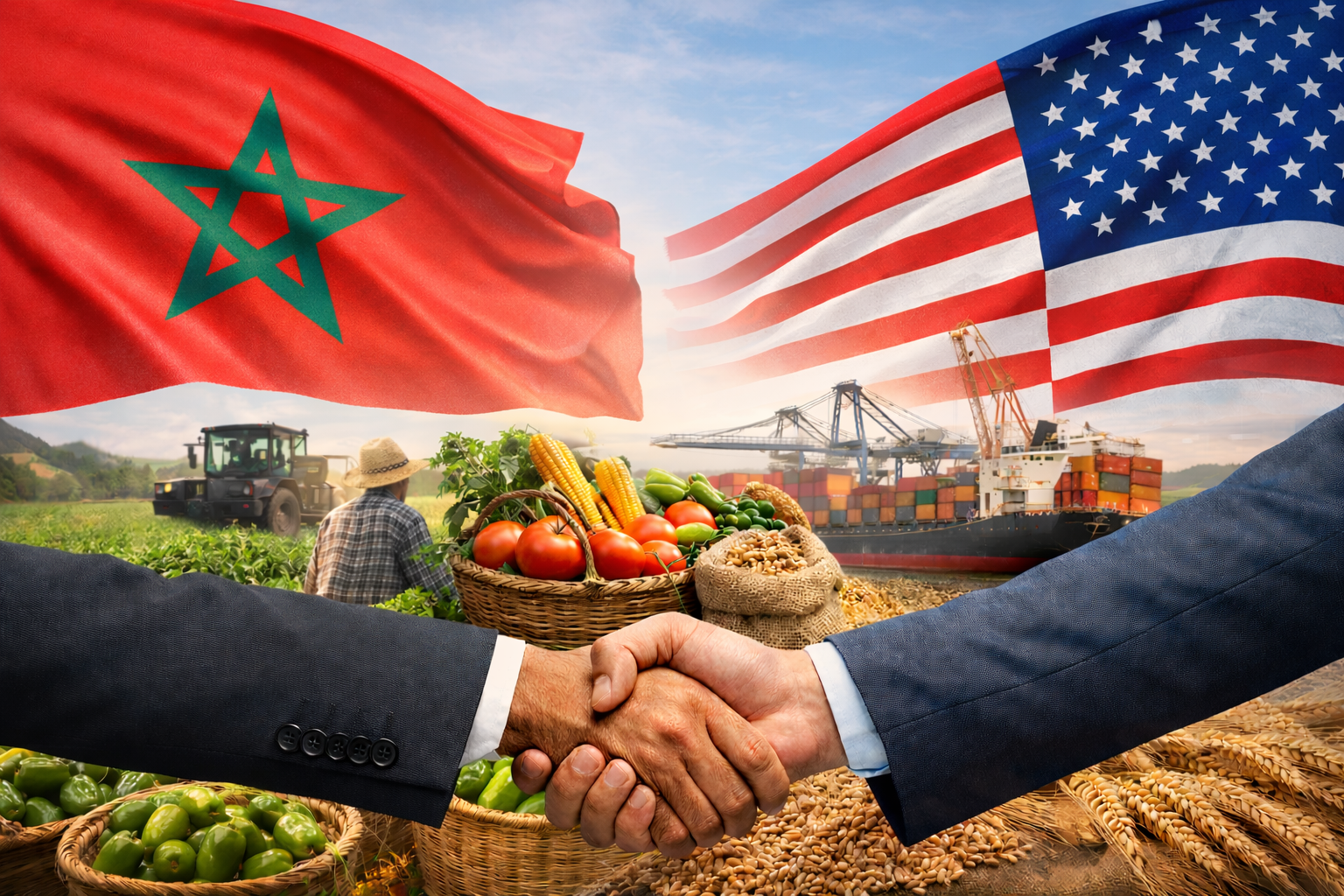
In a world where food security, climate pressure, and supply chain resilience are reshaping agricultural priorities, Morocco is steadily emerging as a partner of growing importance to the United States. The latest signal came with Washington’s decision to include the Kingdom among the priority countries of the USDA’s Food for Progress program for fiscal year 2026, a mechanism designed to support agricultural productivity and expand trade opportunities in emerging economies.
This choice is far from symbolic. It reflects a broader shift in the way Morocco is perceived on the international agricultural map. Long seen mainly as a regional market, the country is now increasingly viewed as a structured platform with strategic depth, one capable of combining production potential, geographic proximity, and a growing capacity to integrate into global agri-food flows. For the United States, supporting Morocco also means backing a reliable partner at the crossroads of Africa, Europe, and the Atlantic world.
The timing is particularly meaningful. Agricultural trade relations between Rabat and Washington have been intensifying, driven by rising interest in commodities, food products, and agricultural inputs. USDA data and public reporting point to stronger commercial exchanges, confirming that the bilateral relationship is no longer limited to technical cooperation or diplomatic goodwill. It is becoming a tangible economic partnership, rooted in trade, productivity, and long-term strategic interests.
For Morocco, this development comes at a crucial moment. The country’s agricultural model is under pressure from recurring drought, water stress, and the need to modernize production systems. In that context, international support is not simply about funding. It is about know-how, market access, technical transformation, and the ability to strengthen resilience in a sector that remains central to employment, territorial balance, and food stability.
What is taking shape, then, is more than an assistance program. It is a strategic convergence. Morocco brings location, stability, and reform momentum. The United States brings institutional backing, market power, and agricultural expertise. Together, the two sides appear to be building a partnership that goes beyond seasonal trade figures and moves toward a deeper logic of co-development.
At a time when agriculture is no longer just about harvests but also about sovereignty, competitiveness, and geopolitical positioning, the Morocco–U.S. axis is acquiring a new dimension. And for Rabat, being singled out by the USDA is not merely recognition. It is a sign that Morocco is becoming an increasingly credible node in the global agricultural equation.